The Department of Social Welfare and Development (DSWD), in collaboration with the City Government of Isabela and local stakeholders, formally turned over, July 1, completed sub-projects under the KALAHI-CIDSS (Kapit-Bisig Laban sa Kahirapan–Comprehensive and Integrated Delivery of Social Services) Program to the barangays of Kaumpurnah Zone III, Tampalan, and Diki.
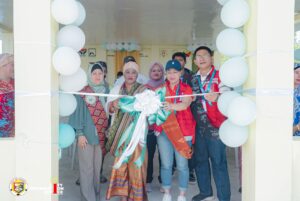
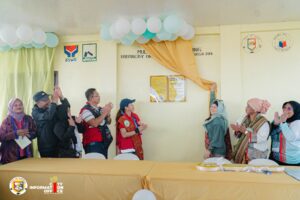
The turn-over ceremonies included blessing rites, ribbon-cutting events, and the unveiling of project markers, symbolizing not only infrastructure development but also the success of participatory governance at the grassroots level.
A key highlight of the event was the inauguration of a multi-purpose building in Barangay Diki. This facility is expected to serve as a central venue for community gatherings, emergency shelter, cultural activities, and other public functions, particularly benefiting the Indigenous Peoples (IP) Badjao community residing in the area. The total project cost was P2,640,000, with P2,554,430 funded through the KALAHI-CIDSS KKB grant, P53,070 in cash and P22,500 in-kind provided by the barangay, and P10,000 in-kind support from the City Government of Isabela.
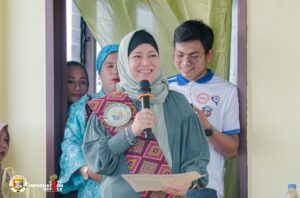
Mayor Sitti Djalia Turabin-Hataman, in her message, expressed pride in the inclusive nature of the project and reiterated the city government’s commitment to empowering all sectors, especially the marginalized IP communities. She emphasized that the multi-purpose building is a reflection of the administration’s development agenda, which focuses on inclusivity, participation, and community resilience.
DSWD Atty. Bernadette Mapue-Joaquin lauded the community’s involvement, stating that the project stands as a concrete result of citizens’ participation in governance. She noted that government becomes more meaningful and responsive when communities actively take part in project planning, implementation, and monitoring.
DSWD Regional Director Riduan Hadjimuddin echoed this sentiment, highlighting that KALAHI-CIDSS is more than just infrastructure—it is about building leadership and institutional capacity within barangays. He emphasized that empowering communities to lead their own development efforts leads to long-lasting and sustainable change.
Barangay leaders including Punong Barangays Daril Jalani of Kaumpurnah Zone III, Nihma Deman of Diki, and Laila Alih of Tampalan expressed deep gratitude to DSWD and the city government for their support. They pledged to maintain and utilize the facilities effectively for the benefit of their constituents.
The event also featured the ceremonial turnover of the key of responsibility, the official oath-taking of Operations and Maintenance (O&M) Committees, and the signing of Certificates of Completion, Turnover, and Acceptance—formalizing the transfer of responsibility and emphasizing accountability and sustainability in project management.
Community leaders and members of the Barangay Development Council–Technical Working Group (BDC-TWG) also shared their experiences and testimonies, highlighting how their involvement in the program strengthened local leadership, transparency, and accountability. Through KALAHI-CIDSS, the barangays not only received critical infrastructure but also gained valuable experience in participatory governance. (Words by SJ Asakil/Photos by M. Santos, CIO)