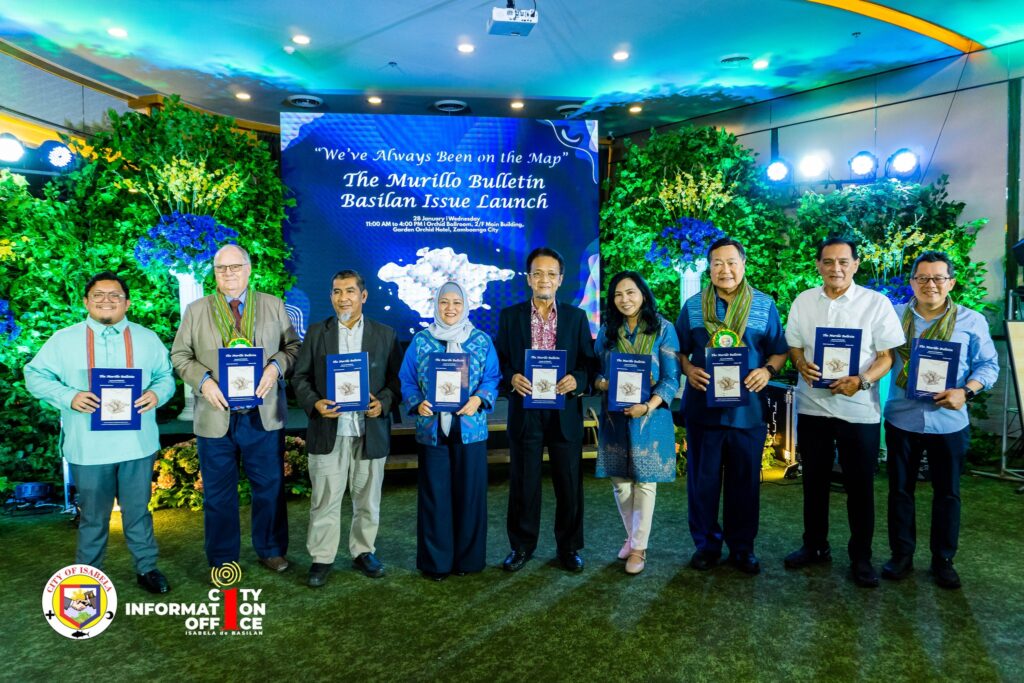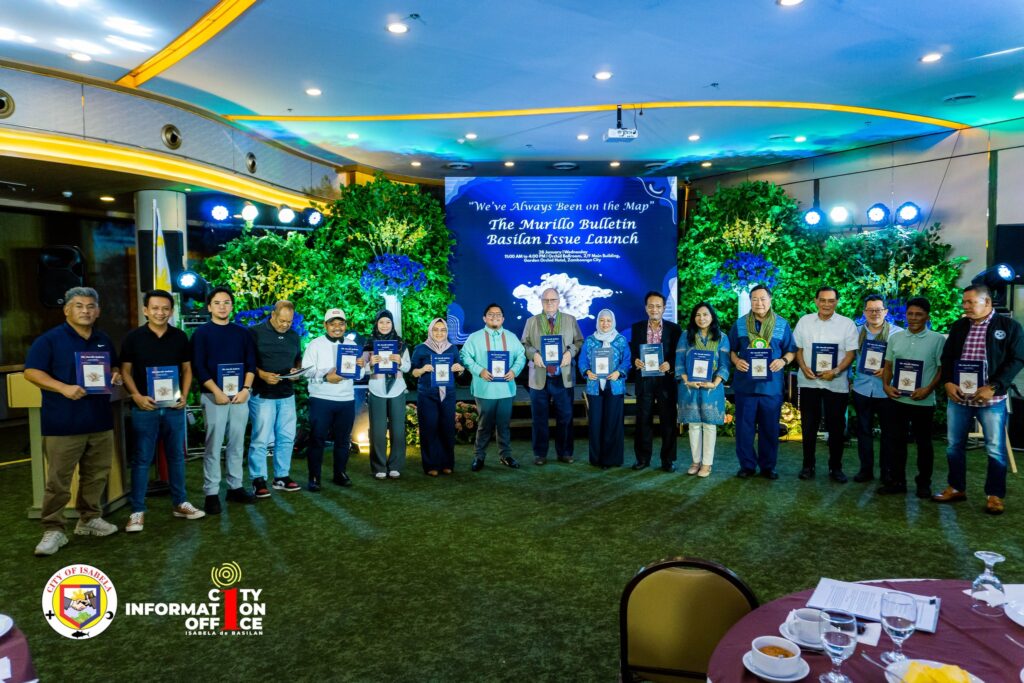
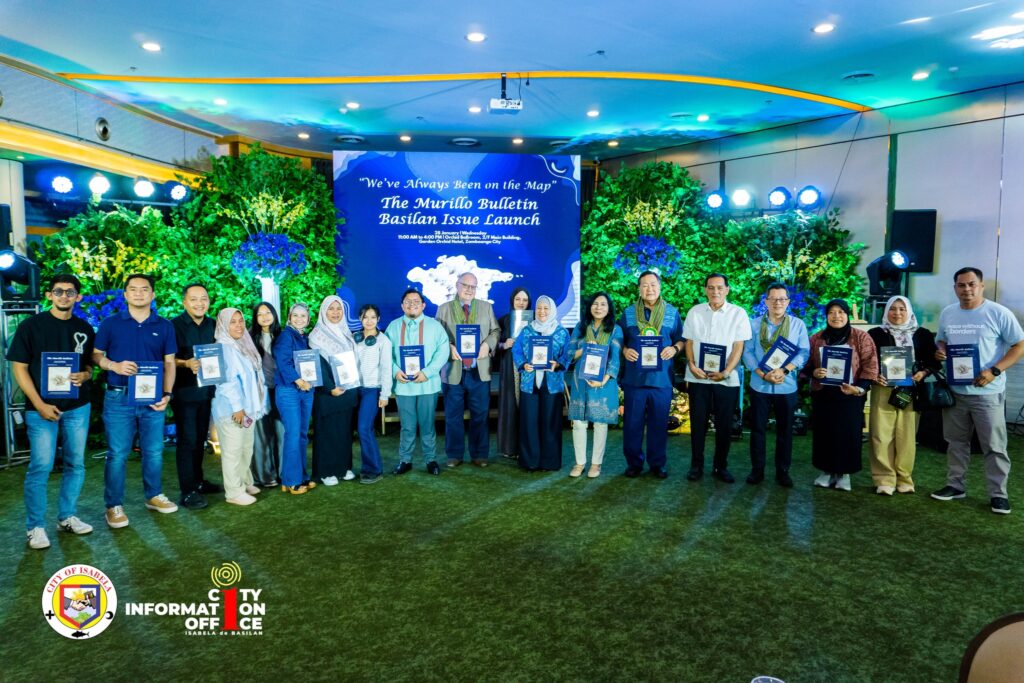
Basilan’s long-standing presence in Philippine and world maritime history was formally reaffirmed with the launch of “We’ve Always Been on the Map: The Murillo Bulletin Basilan Issue,” held on January 28 in Zamboanga City. Organized by the City Government of Isabela under the leadership of Mayor Sitti Djalia Turabin-Hataman, the event convened scholars, cultural workers, public officials, and advocates of local history and historical cartography, marking a significant milestone in evidence-based historical reclamation.
The launch unveiled the Basilan Special Issue of The Murillo Bulletin, the official biannual journal of the Philippine Map Collectors Society (PHIMCOS). Dedicated to the study of antique maps, prints, and historic documents relating to the Philippines, the Bulletin is named after the seminal Murillo Velarde Map of 1734, widely regarded as the “Mother of all Philippine Maps” for its panoramic and scientifically detailed depiction of the archipelago.
In her rationale and welcome remarks, Mayor Sitti Djalia Turabin-Hataman emphasized the importance of grounding Basilan’s identity in rigorous scholarship and primary sources, asserting that historical consciousness and cultural identity are essential pillars of inclusive and forward-looking governance.
She further articulated the deeper motivation behind the initiative, framing it as both a historical correction and an affirmation of identity. “For a long time, our generation believed that Basilan was merely an insignificant dot on the map. Today, we are reminded that our island is strategic in both geography and history, and that we have contributed meaningfully to the story of the region,” the Mayor said. She added that the publication strengthens Basilan’s resolve to reclaim its name and standing, expressing hope that the Murillo Bulletin Basilan Issue would help correct long-standing negative narratives about the island through credible references, rigorous scholarship, and data-based historical evidence.
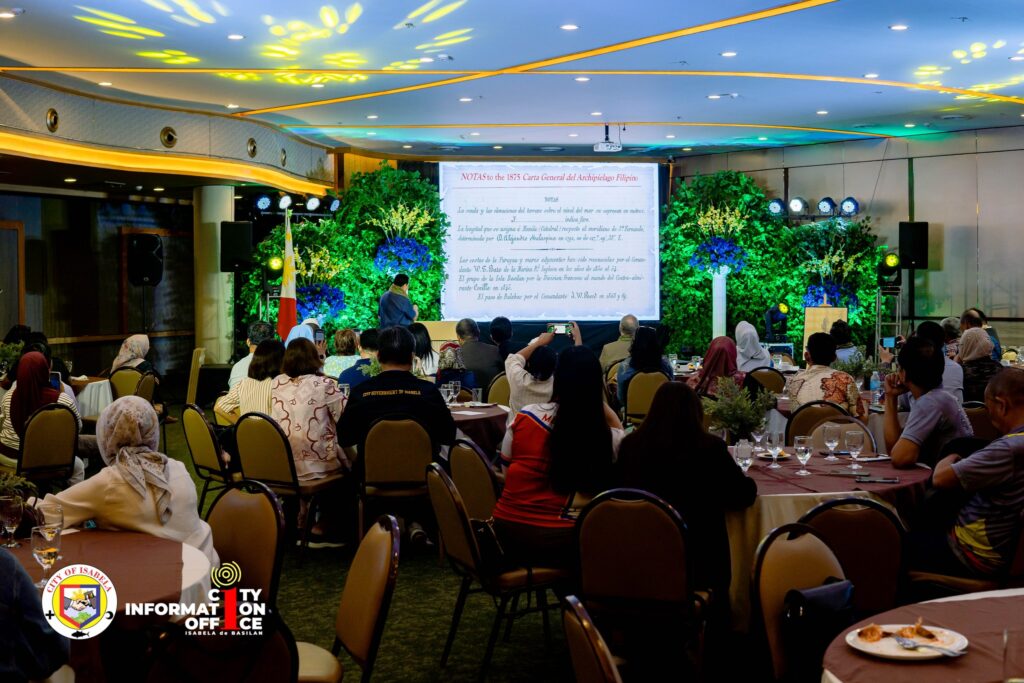
The scholarly core of the program featured two major lectures. Talk 1 was delivered by Antonio Carpio, retired Senior Associate Justice of the Supreme Court of the Philippines, who discussed the 1875 Carta General del Archipiélago Filipino. His lecture situated historical maps as legal, political, and ethnographic documents, demonstrating how cartography underpins questions of sovereignty, territorial integrity, and national memory.
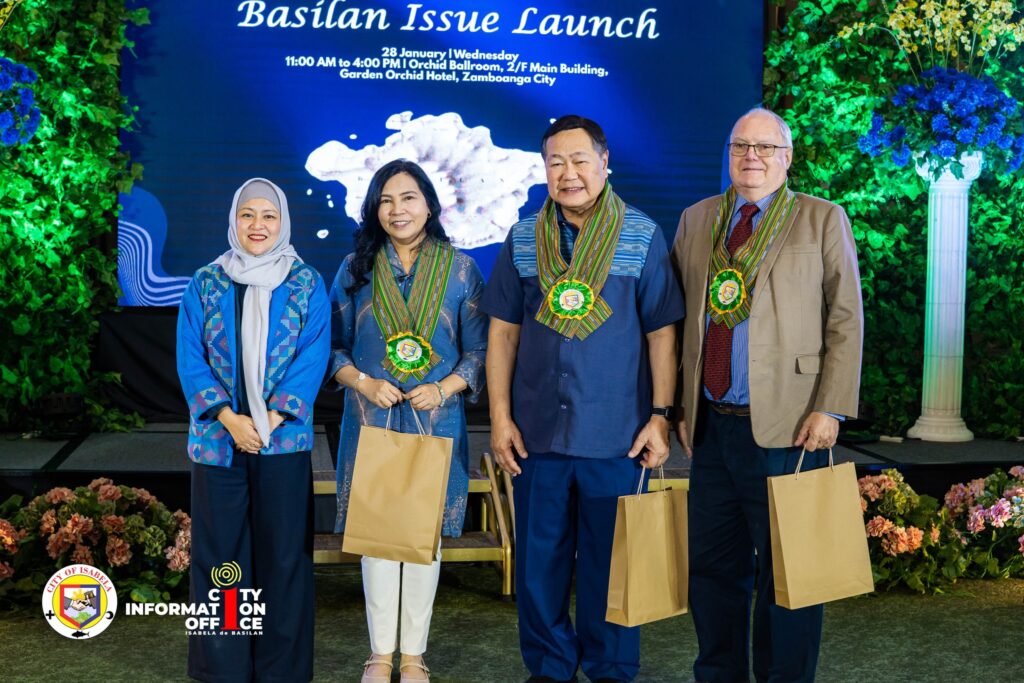
Retired Justice Carpio formally turned over a copy of the 1875 Carta General del Archipiélago Filipino, regarded as the most complete and detailed official map of Philippine territory during the Spanish period, to the City Government of Isabela. The map was received by Mayor Turabin-Hataman.
Talk 2, titled The History and Mapping of Basilan and the Basilan Strait, was presented by Dr. Felice Noelle Rodriguez, Director of El Kaban de Zamboanga, together with Peter Geldart, trustee and former curator of PHIMCOS exhibitions. Their joint presentation traced Basilan’s consistent appearance in Spanish-era and later maps, highlighting the island and its surrounding waters as integral—rather than peripheral—spaces of navigation, trade, and regional interaction.
A message was delivered by Sakiran Hajan, who shared reflections on memory, identity, and the responsibility of preserving and transmitting historical knowledge to future generations.
The program concluded with closing remarks and words of gratitude to the speakers from Basilan District 1 Board Member Ahmed Djaliv Amin Hataman, who underscored the profound significance of the Basilan map to the Basileño people, emphasizing its role in affirming historical presence, collective memory, and a shared sense of identity.
In his message, Board Member Hataman reflected on the deeper meaning of the maps and scholarship presented, stating: “What you gave us is more than just pieces of paper. I thank you for compiling this collection—this mirror—that we can finally hold up to our faces and, for the first time for many of us, admire ourselves again.”
He further emphasized that the occasion reaffirmed a fundamental truth long overlooked: that Basilan’s dignity and validity were never something to be earned or granted by others. “Our validity, our dignity is inborn. It is in our breath, in every step we take, in everything we do. Today ends our begging to be noticed. Today begins our affirmation of who we are—and you have allowed that,” he said.
As the Murillo Bulletin Basilan Issue makes clear, Basilan has never been absent. It has always been on the map—and today, its story is being told with clarity, rigor, and pride. (Words by M. Lim, CIO/Photos by KC Galos, IsaTV)