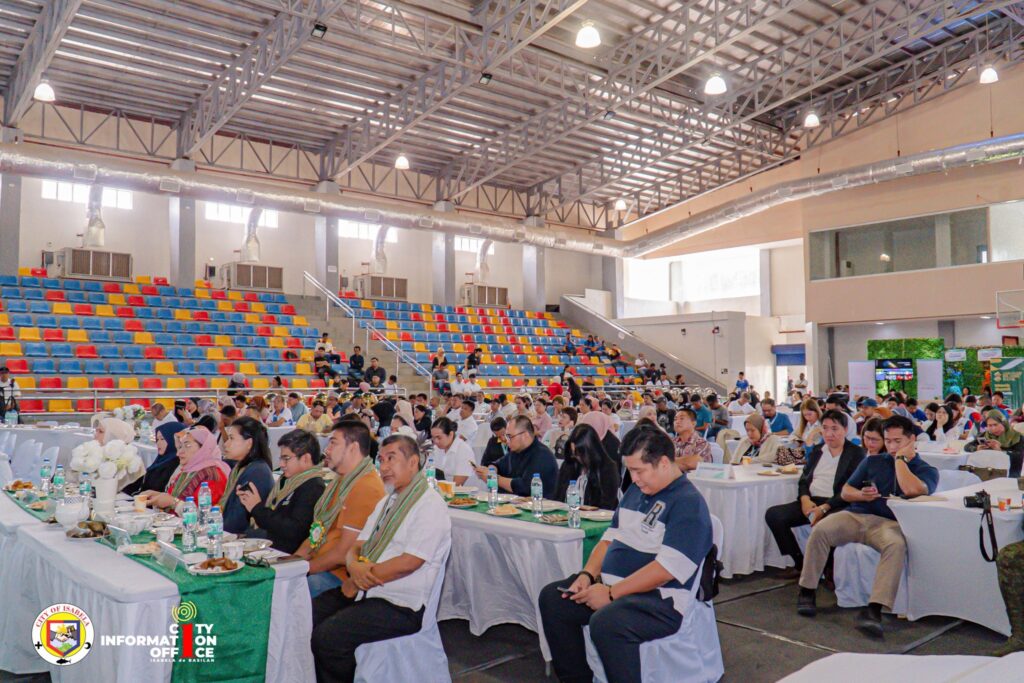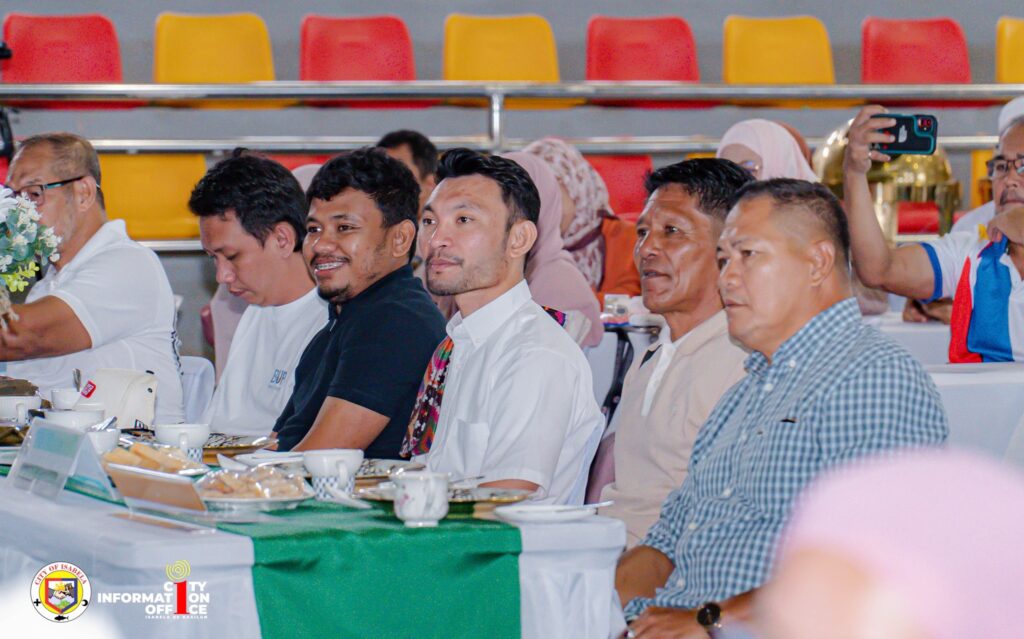
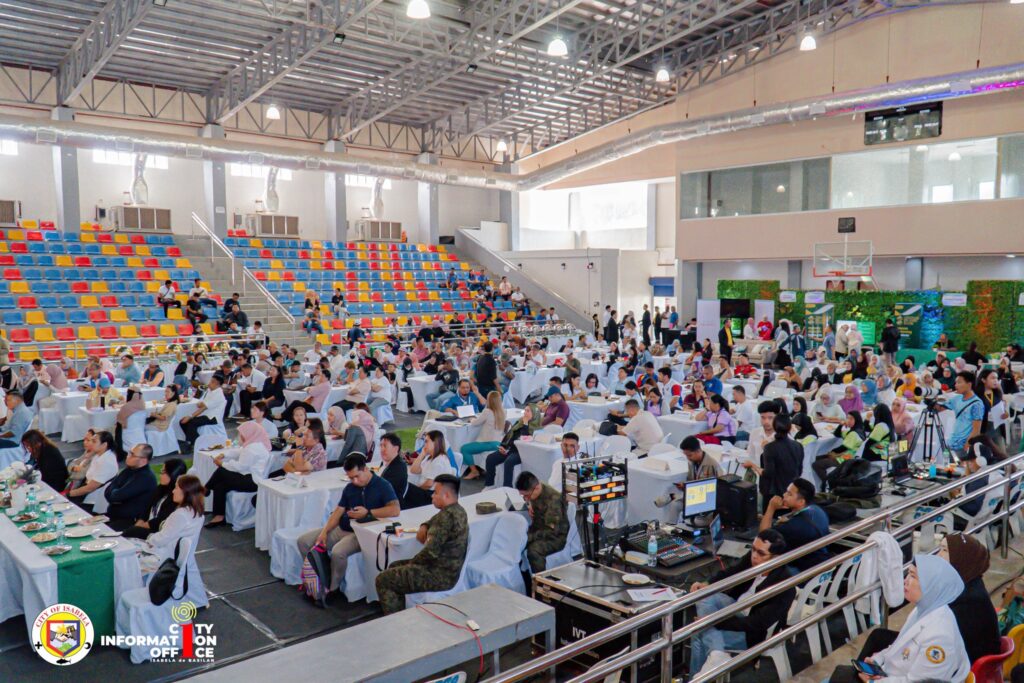
Marking a milestone in the country’s journey toward inclusive and ethical finance, the City Government of Isabela, thru its Public Employment and Services Office (PESO), in partnership with the Bangko Sentral ng Pilipinas, successfully hosted the first-ever Islamic Banking Caravan on January 27 at the Isabela City Civic and Cultural Center.
The landmark initiative was spearheaded by Isabela City Mayor Sitti Djalia Turabin-Hataman, principal author of the Islamic Banking Law, reaffirming the city’s role as a trailblazer in advancing financial inclusion in Basilan and the broader Muslim Mindanao region. The event brought together policymakers, financial experts, and community leaders to promote greater awareness and understanding of Islamic finance in the Philippines.
More than an information drive, the Caravan positioned Islamic banking as a practical, ethical, and inclusive financial system—one that does not replace conventional banking, but complements it through Shari’ah-compliant principles grounded in fairness, transparency, and shared responsibility. Often referred to globally as ethical banking, Islamic finance recognizes humans as custodians of wealth, permits trade and enterprise, forbids interest (riba), and promotes risk-and-reward sharing to ensure that prosperity is mutual rather than extractive.
Ethical Finance for All
In her address, Mayor Hataman underscored that Islamic banking is not exclusively for Muslims. “In many parts of the world, Islamic banking is embraced as ethical banking,” she said, emphasizing that its foundations—justice, social responsibility, and inclusion—are universal values. At its core, Islamic finance ensures that growth benefits everyone, leaving no sector behind.
A defining feature highlighted during the Caravan was the system’s strong social dimension through zakat and waqf, mechanisms that encourage the circulation of wealth and provide sustained support for the poor and vulnerable. Combined with profit-and-loss sharing, Islamic finance directly links financial activity to the real economy, discouraging speculation and excessive risk.
Addressing the Inclusion Gap
The rationale for advancing Islamic finance is compelling. With a national population of 119.1 million as of December 2024 and an estimated 11% Muslim population, demand for Shari’ah-compliant financial services continues to grow. Yet, 29% of cities and municipalities nationwide remain unbanked, with BARMM as the most underserved region, where 86% (109 of 127) localities have no banking presence. Islamic banking offers a pathway to reach these communities, particularly micro-entrepreneurs, farmers, fisherfolk, and informal workers long excluded from the formal financial system.
Strengthening the Local Economy
The program formally opened with a welcome message from City Vice Mayor Ar-Jhemar Ajibon, who emphasized that the Islamic Banking Caravan expands financial opportunities for Isabeleños—particularly small entrepreneurs—by bringing ethical, interest-free, and inclusive banking services directly to the community. He noted that financial education and on-site banking support can translate into improved livelihoods and a stronger, more inclusive local economy.
BSP Mindanao Regional Office Bank Officer IV Hermogenes Buenaflor, who discussed the BSP–DILG Paleng-QR Ph Plus Program, highlighting how interoperable QR-based payments empower vendors, transport operators, and small merchants to safely participate in the digital economy with LGU support, financial literacy, and consumer protection.
Shari’ah Principles and Global Growth
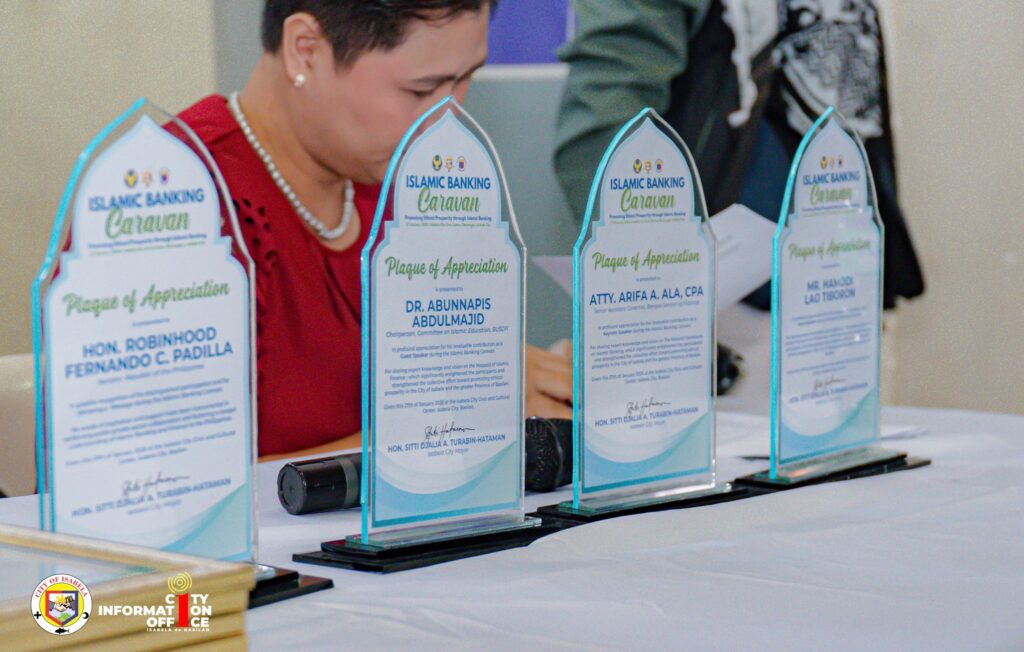
Providing deeper context, BUSCFI Committee on Islamic Education Chairman Abunnapis Abdulmajid explained the Maqasid of Islamic finance—its ethical objectives rooted in justice, trust (amanah), and the prohibition of riba, gharar, and maysir. He linked these principles to real-economy instruments such as Murabaha, Musharakah, Mudarabah, Ijarah, and Sukuk, underscoring Islamic finance’s commitment to human dignity and shared prosperity through zakah, sadaqah, and waqf.
In her keynote, Bangko Sentral ng Pilipinas (BSP) Senior Assistant Governor Arifa Ala highlighted the Philippines’ single regulatory framework for Islamic banking, stressing that all existing banking regulations apply equally to both conventional and Islamic players, with supplemental rules to address Islamic banking’s unique characteristics. She noted that globally, Islamic finance grew to USD 3.88 trillion in 2024, with Islamic banking accounting for 71.6% of total assets, signaling strong growth potential for the country.
Key milestones cited included the licensing of Islamic banks and banking units, approval of takaful and micro-takaful operators, establishment of the Shari’ah Supervisory Board in BARMM, and the successful 2023 sovereign sukuk issuance, which recorded a 4.90-times oversubscription—clear indicators of investor confidence.
A Whole-of-Government Push
Speakers Queenie Padilla and Hamodi Lao Tiboron shared insights on Islamic banking as a system of ethical prosperity and its practical implementation in the Philippine context. The activity concluded with closing remarks from Julie Ann Marie Lim, PCCI–Isabela City President.
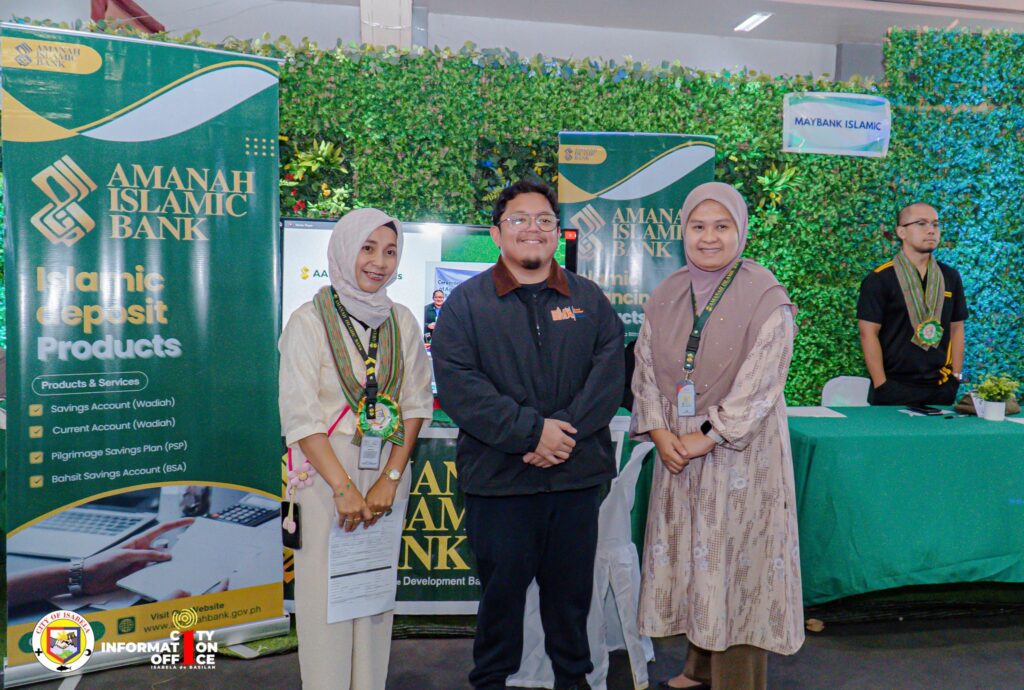
The Caravan also featured booths showcasing Islamic finance products and services from Al-Amanah Islamic Investment Bank of the Philippines, Maybank Philippines, Pru Life UK, and Card Bank, Inc.
Toward Shared Prosperity
As Islamic banking traces its roots in the Philippines back to 1973 with the creation of Al-Amanah Bank, Isabela City’s first Islamic Banking Caravan signals a renewed commitment to harness this decades-old institution for contemporary development challenges. By promoting ethical finance, shared risk, and social responsibility, the City Government of Isabela affirms that Islamic finance is for all—a powerful tool to bridge financial gaps, stimulate inclusive growth, and build a more just and resilient economy for Isabeleños and the entire BARMM.